
Last Updated: November 6, 2026
A homeowners policy may cover some risks connected to an ADU project, but you should not assume your existing policy covers the ADU while it is being built. Coverage depends on the policy, the type of ADU, how the property will be used, and the insurance arrangements for the construction itself.
If you are planning an ADU in Greater Boston, the practical first step is to speak with your insurer or licensed insurance agent before construction begins. You need to understand how your existing policy applies, whether separate construction-phase coverage should be arranged, and how the finished ADU will need to be insured based on whether it is attached, detached, used by family, or rented.
Start With Your Homeowners Policy Before Construction Begins
The Massachusetts Division of Insurance advises homeowners to notify their insurer before construction begins because an attached or detached ADU can change the property’s insurance risk and coverage needs.
When notifying your insurer or agent, take the opportunity to have a conversation that addresses these questions:
- Does my current homeowners policy provide any coverage for the ADU while it is being built?
- Does the project require an endorsement, increased limits, or separate construction coverage?
- Does it matter whether the ADU is attached, interior, or detached?
- How will the finished unit affect my dwelling or other-structures limits?
- Does the intended occupancy change the coverage I need?
- What information does the insurer need before construction begins?
The answers are policy-specific. Two homeowners building similar ADUs can have different insurance requirements because carriers, policy forms, limits, underwriting rules, and intended uses can differ.
Plan Insurance Alongside the ADU Project
Insurance should be addressed as part of project preparation rather than as an issue discovered after work starts.
A useful sequence is:
- Define the ADU you are considering. Determine whether it will be interior, attached, or detached and how you expect to use it.
- Discuss the project with your insurer or licensed agent. Explain the proposed construction and intended occupancy.
- Understand the construction-phase coverage. Determine how your existing policy applies and whether additional coverage is appropriate.
- Review the construction agreement. Confirm who is responsible for any builders-risk coverage and what contractor insurance documentation will be provided.
- Update coverage when the ADU is completed. Tell the insurer when construction is finished and confirm that the completed structure and intended use are properly reflected.
This approach does not assume one insurance solution for every ADU. It also reflects the planning principle behind Beantown Builders’ Right Plan Framework™: identify owner objectives, feasibility, and constraints during Discover, then work those considerations into the project during Plan before Build begins. Insurance remains a decision for you and your insurance professional, but identifying it as a project constraint early helps keep the construction plan from getting ahead of the coverage decisions.
What to Confirm Before ADU Construction Starts
Before construction begins, coordinate two separate conversations: one with your insurance professional and one with your contractor. Your insurer may ask for project facts such as the ADU configuration, proposed scope, construction value, schedule, and intended occupancy. Your contractor can provide construction information; your insurer determines what that information means for coverage.
With your insurer or agent, confirm:
- How your existing homeowners policy applies during construction.
- Whether additional construction-phase property coverage is needed under your policy, construction agreement, or lender requirements.
- What limits, deductibles, exclusions, and covered causes of loss apply.
- Whether materials stored on site or in transit are covered.
- Whether occupancy during construction changes anything.
- What must happen to the policy when the ADU is completed.
With your contractor, confirm:
- What the construction agreement says about builders-risk coverage.
- Which party is responsible for obtaining any required construction-phase property insurance.
- What proof of contractor liability insurance will be provided.
- What proof of workers’ compensation insurance will be provided, if applicable.
Massachusetts homeowner guidance for hiring contractors recommends asking a contractor for proof of liability insurance and workers’ compensation insurance, if applicable.
Those contractor policies do not replace your conversation with your own insurer. They address different exposures.
Permitting and Insurance Are Separate Questions
Insurance planning does not replace construction permitting, and a building permit does not guarantee a particular insurance outcome.
Massachusetts’ current ADU permitting guidance states that construction of a Protected Use ADU must comply with applicable local rules and codes and requires a building permit. Because municipal procedures and property conditions vary, property owners should confirm the process with their local building department.
From a project-planning standpoint, keep these responsibilities separate:
- Your local building department determines permitting and inspection requirements.
- Your insurer or licensed agent determines how your policy responds and what coverage options are available.
- Your contractor and design team define and execute the construction scope under the project agreements.
Keeping those roles clear makes it easier to identify what still needs to be resolved before construction begins.
ADU Insurance During Construction: Separate the Different Risks
One of the most important distinctions is that homeowners insurance, builders risk, contractor liability insurance, and workers’ compensation serve different functions.
They should not be treated as interchangeable.
| Coverage | What it generally addresses | What you should confirm |
| Homeowners insurance | Existing dwelling, personal property, liability, and other covered property subject to the policy | How ADU construction changes your existing coverage |
| Builders risk | Property being built or renovated and certain materials or work in progress, subject to the policy | Whether it is needed, who obtains it, what property and causes of loss are covered, and when coverage begins and ends |
| Contractor general liability | Certain third-party bodily injury or property-damage claims arising from contractor operations | What coverage the contractor carries for the project |
| Workers’ compensation | Work-related injury coverage for employees where applicable | What proof of applicable coverage the contractor provides |
Builders-risk insurance is designed for property exposures while construction is underway. Policies commonly address the structure being built or renovated and certain construction materials, but the exact covered property, causes of loss, deductibles, exclusions, and optional protections vary by policy. Travelers’ overview of builders-risk insurance provides examples of the types of property and losses these policies may address.
That is why the question is not simply, “Do I need builders risk?” The better questions are:
Does my existing policy cover this construction exposure, and if additional coverage is needed, who is responsible for obtaining it under the construction agreement?
The International Risk Management Institute notes that a builders-risk policy may be purchased by either the project owner or the contractor, depending on the project’s insurance and contract structure. The construction agreement should make that responsibility clear rather than leaving either party to assume who will provide the coverage.
How Attached and Detached ADUs Can Affect Coverage After Construction
Once construction is complete, the insurance question changes again.
The Massachusetts Division of Insurance explains that a basement or attached-garage conversion will likely be treated as part of the primary structure, which can require an increase in dwelling coverage limits. A newly constructed detached ADU will likely require an endorsement that increases the applicable limit or provides separate limits. The appropriate arrangement depends on the insurer and the individual property.
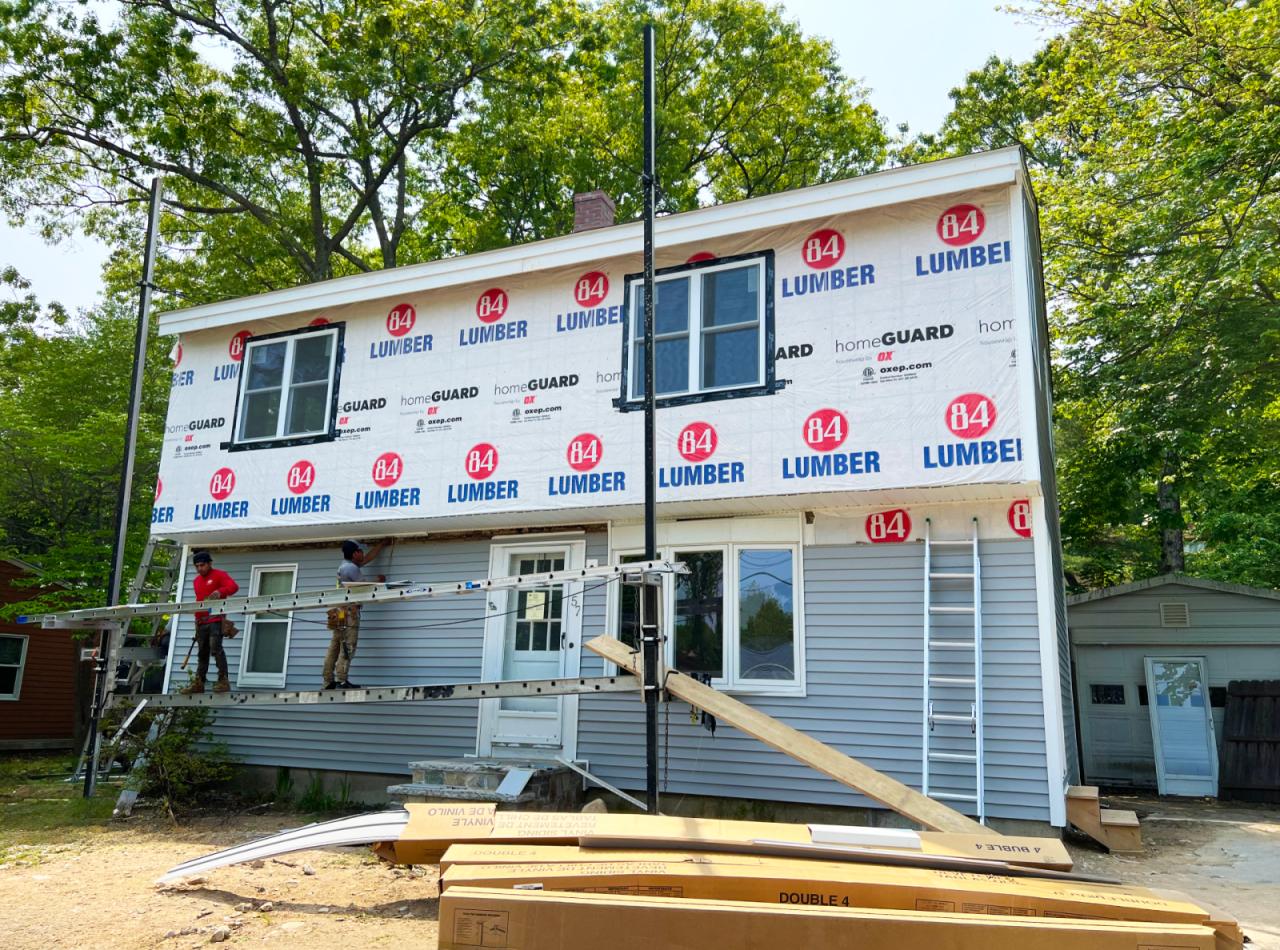
“ADU” describes the use of the space, but it does not tell your insurer how the property is physically changing. Beantown Builders’ Abington Second-Level ADU Addition, for example, added a second story to an existing structure rather than creating a freestanding building. That is materially different from constructing a detached ADU, which is why the actual configuration of your project matters when you discuss coverage with your insurer.
Use the ADU configuration to guide the conversation:
| ADU situation | What to ask your insurer or agent |
| Interior conversion | Will the finished space remain under the dwelling coverage, and does the limit need to increase? |
| Attached addition | How will the added square footage and replacement cost affect dwelling coverage? |
| Detached ADU | Does the existing other-structures coverage apply, or is an endorsement or separate limit needed? |
| ADU used by family | Does the occupancy create any policy changes? |
| ADU rented to a tenant | Does rental use require landlord or other rental-related coverage? |
Massachusetts’ home-insurance guidance also notes that detached structures are usually covered under a separate “other structures” limit and advises homeowners to confirm that the amount is appropriate.
If the ADU Will Be Rented, Address That With Your Insurer Early
Rental use changes the risk profile of the property.
Do not assume that the same policy arrangement used for an ADU occupied by a family member will apply when the unit becomes a rental.
Before a tenant moves in, discuss:
- Whether the rental changes the type of coverage required.
- Whether landlord coverage or an endorsement is appropriate.
- How liability coverage applies.
- Whether loss-of-rental-income coverage is relevant.
- Whether the tenant should carry renters insurance.
- Whether short-term rental use is treated differently.
The Massachusetts Division of Insurance notes that a rented ADU may require landlord coverage and recommends discussing the individual situation with an insurer or licensed agent.
Where Beantown Builders Fits
Insurance coverage decisions belong to you and your insurance professional. Beantown Builders’ role is to help you develop and execute the construction plan for the ADU.
Our ADU design-build services in Greater Boston include feasibility review, design, permitting, and construction. As the project develops, having a defined ADU type, scope, construction approach, and intended use also gives you clearer information to discuss with your insurer.
If you are considering an ADU and want to understand the construction side of the project, Book a Free Discovery Call to discuss your project goals, high-level scope, timing, and budget range and explore whether our approach aligns with your project.
Frequently Asked Questions
Does homeowners insurance cover an ADU while it is being built?
It depends on your policy and insurer. Adding or constructing an ADU can change the property’s risk profile, and your existing homeowners policy may not address every construction-phase exposure. Contact your insurer or licensed agent before work begins to determine how the policy applies and whether additional construction coverage should be arranged.
Do I automatically need builders-risk insurance for an ADU?
Not necessarily. Builders risk is designed to cover certain property exposures during construction, but whether you need a separate policy depends on your existing coverage, the project, contractual requirements, and potentially lender or insurer requirements. Confirm the arrangement with your insurance professional and construction contract rather than assuming it is mandatory in every case.
Who should buy builders-risk insurance: the homeowner or contractor?
Either may be responsible depending on the contract and insurance arrangement. The construction agreement should identify who obtains any required policy and the parties and property that need to be insured. Confirm those details before construction begins.
Will a detached ADU be covered by my homeowners policy after construction?
It may be, but the existing limit may not be appropriate for a complete dwelling. Massachusetts insurance guidance indicates that a new detached structure will likely require an endorsement that increases the applicable limit or provides separate limits. Ask your insurer how the finished ADU will be classified and insured.
Do I need different insurance if I rent my ADU?
Possibly. Massachusetts insurance guidance states that rental use may require landlord coverage, and individual insurers may handle rented ADUs differently. Tell your insurer how the unit will be used before a tenant moves in and confirm the property, liability, and rental-related coverage that applies.