
Last Updated: November 18, 2026
Restoring historic brickwork is not simply a matter of replacing loose mortar or making an old wall look new. Cracked bricks, failing joints, and stains can have different causes, and the wrong repair may conceal a problem or damage materials worth preserving. If you own an older home or small multifamily property in Greater Boston, this guide will help you recognize warning signs, understand how restoration decisions are made, and discuss the right scope with qualified professionals.
Historic Masonry Deterioration and Repair Techniques
Start by identifying what has changed, not by deciding which repair to buy. You can photograph affected areas from a safe location and note when you first noticed them, whether they have spread, and any known history of leaks or previous repairs. Common warning signs include:
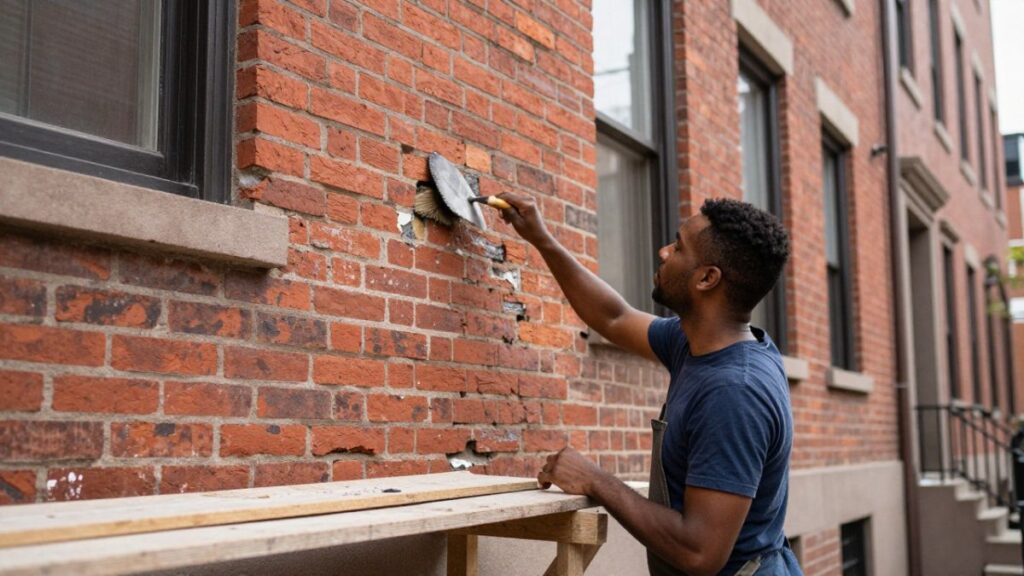
- Crumbling or missing mortar: Gaps between bricks may allow more water into the wall, but the extent of repointing should be determined after the joints are assessed.
- Spalling brick: When a brick’s face flakes or breaks away, moisture, freezing, salts, or incompatible previous repairs may be involved. Spalling alone does not identify the cause.
- Cracks near windows or doors: These can be associated with movement or problems involving the supports above openings, called lintels. They warrant professional evaluation rather than cosmetic filling alone.
- Bulging, leaning, or loose masonry: Movement or unstable brickwork may indicate a structural concern. Keep clear of potentially falling material and arrange prompt assessment by an appropriate professional.
- Recurring dampness or white deposits: Water may be entering through roof details, gutters, flashing, parapets, or other parts of the building. White deposits can be salts brought to the surface by moisture.
The National Park Service’s overview of common brick masonry problems describes several sources of cracking and deterioration, including settlement, movement, freezing conditions, and corrosion of embedded metal. Historic masonry does not deteriorate for one reason alone.
A masonry restoration specialist should determine which conditions are limited to the joints, which affect individual bricks, and which call for a structural engineer or preservation professional. Repairing a wall before addressing an active leak or movement may leave the underlying problem unresolved.
Repointing Historic Masonry: Mortar Matching and Joint Repair
Repointing means removing deteriorated mortar from the joints and replacing it with compatible new mortar. It can restore the integrity and appearance of sound masonry, but it does not repair a failed lintel, stop a roof leak, or correct a moving wall. The project team should address those causes before specifying the joint repairs.
The replacement mortar must suit the existing brick and wall construction. Its strength, ability to let moisture vapor pass through, sand, color, texture, and joint finish all matter. A mix that is too hard or dense for adjacent masonry can contribute to cracking and spalling. However, not every historic building originally used lime-only mortar: mortar formulations changed over time, and some early-20th-century buildings incorporated Portland cement.
As the National Park Service explains in Preservation Brief 2, an appropriate match is based on examination of the existing masonry and historic mortar, not a universal recipe selected from the building’s age. A qualified specialist may recommend mortar analysis or sample panels where needed. The professional should also establish how failed mortar will be removed without damaging the edges of the bricks and how the new joints will match the existing appearance.
As the owner, ask which areas truly need repointing, what material assessment supports the proposed mix, and what other problems must be corrected first. Before full repointing, ask the specialist how a sample area will be assessed for mortar color, joint texture, and finish after curing, alongside the original masonry. The specialist—not you—remains responsible for material compatibility and repair specifications.
Historic Brick Cleaning Methods and Historic Brick Replacement
Cleaning should begin with a question: does the masonry need cleaning at all? Dirt, staining, paint, and biological growth call for different treatments, and some historic finishes are worth retaining. A cleaner appearance is not necessarily a better preservation outcome.
A qualified restoration professional should assess the brick, mortar, and material to be removed before selecting a method. Gentle brushing or carefully controlled low-pressure water cleaning may be appropriate for some sound masonry. High-pressure washing and abrasive blasting, including sandblasting, can erode historic surfaces and joints. Chemical treatments or paint removal require their own compatibility assessment. Water cleaning may also be unsuitable for badly deteriorated surfaces or when freezing is possible.
The National Park Service’s cleaning guidance recommends trying the gentlest effective methods first and assessing trial areas after they have dried. Ask the specialist how test patches will be evaluated, how adjoining materials will be protected, and whether the proposed level of cleaning is appropriate for the building.
Brick replacement is a separate decision from repointing. If the mortar has failed but the bricks remain sound, replacing the bricks may be unnecessary. If individual units are severely fractured, missing, or too deteriorated to retain, a qualified masonry specialist can assess selective replacement. Replacement bricks should be compatible in dimensions, appearance, strength, and moisture-related behavior, not merely similar in color. If damage is associated with structural movement, an engineer may need to evaluate the wall before replacement is designed.
Ask to see proposed replacement samples and to understand how much original masonry can remain. The goal is to repair what is serviceable and replace only what the condition and approved scope require.
Plan Historic Masonry Repairs in Greater Boston
Greater Boston’s wet and freezing weather makes moisture investigation and repair timing particularly important. Masonry and mortar work must be planned around the conditions needed for proper installation and curing; a contractor should explain how weather affects the sequence rather than promising a date before the scope is established.
Historic status matters, but age alone does not establish legal restrictions. In Boston, exterior work on designated landmarks or properties in local historic districts can require design review. The Boston Landmarks Commission’s individual-landmark guidance identifies masonry cleaning and repointing among the activities that may be reviewed. Other Greater Boston municipalities have their own rules. Ask the project team to establish which approvals apply to your property and who will coordinate them under the agreement.

For townhouses or multifamily buildings, also discuss shared walls, access, protection of neighboring property, and any effect on occupants. Our guide to Boston townhouse renovations explains broader planning considerations for these properties.
Before approving a proposal, ask the project team to distinguish confirmed repairs, conditions needing further investigation, and work that depends on those findings. The written scope should identify proposed repointing or brick replacement areas, who specifies materials and approves samples, how adjacent property and occupants will be protected, and who handles permits or specialist evaluations. This separation helps you compare proposals without treating unresolved work as included—or authorizing visible repairs before their underlying cause is understood.
Planning Historic Masonry Work as Part of a Renovation
When damaged brickwork is one part of a larger historic renovation, the important decision is how masonry repairs connect with roofing, drainage, structure, and other improvements. Beantown Builders’ historic home rehabilitation services focus on evaluating existing conditions and planning coordinated work on older properties. Where specialist mortar analysis or masonry conservation is needed, the project scope should establish who will perform that work and how the findings affect the wider renovation.
If you are considering a broader renovation to an older Greater Boston property, Book a Free Discovery Call to discuss your goals, high-level scope, timing, and budget range. Detailed site assessments, specialist evaluations, and project-specific pricing are separate steps when appropriate.
Frequently Asked Questions
How can you tell if historic brick needs repointing?
Missing, loose, or crumbling mortar and open joints can indicate a need for repointing. These signs do not establish how much work is required or why deterioration occurred. Photograph the condition and ask a masonry professional to assess the joints and investigate moisture or movement before repairs are specified. Avoid probing historic mortar with tools yourself.
What type of mortar should be used on historic brick?
Use a mortar specified to be compatible with the existing brick and historic mortar. Strength, permeability, sand, texture, and joint appearance matter. Lime-rich mixtures are appropriate for many older buildings, but there is no universal mix for all historic masonry, and some historic buildings originally used Portland cement. A qualified professional should assess the materials and select the repair mortar.
Can you pressure wash historic brick?
High-pressure washing can damage historic brick and mortar joints and should not be treated as a routine cleaning method. Carefully controlled low-pressure water cleaning may be appropriate for sound masonry after professional assessment and a successful test area. Deteriorated surfaces, temperature, coatings, and adjacent materials can change the recommendation; abrasive blasting is generally unsuitable for historic masonry.
When should damaged historic bricks be replaced?
Consider selective replacement when a qualified specialist determines that individual bricks are missing or too damaged to remain serviceable. Sound bricks should generally be retained. The specialist should address the cause of deterioration and select compatible replacement materials; structural movement may require an engineer’s assessment first.