
Last Updated: October 14, 2026
An accessory dwelling unit, or ADU, is a separate residential unit created within, attached to, or on the same lot as an existing home. For Boston homeowners, an ADU can create rental income, space for family, or more flexibility as household needs change. But those benefits depend on whether the property can support the type of ADU you want, what approvals are required, and whether the cost and design support your long-term goals.
If you are considering an ADU, start with what you want your property to accomplish: family space, rental potential, or flexibility as your needs change. Under Boston’s current ADU eligibility rules, you must own and occupy a one-, two-, or three-family home; condominiums and LLC-owned properties are excluded. This guide explains six potential benefits and the feasibility questions to address before committing to design or construction.
Benefit 1: Rental Income Can Help Offset Property Costs
Boston identifies rental income as one potential homeowner benefit of an ADU in its ADU guidance. A permitted dwelling can create a separate unit that may be rented when the applicable requirements are met.
The important word is may. Rental income depends on market conditions, financing, taxes, insurance, maintenance, and the responsibilities of being a landlord. Boston requires annual ADU registration even when no rent is collected, including when adult relatives not listed on the deed occupy the unit. Vacant ADUs must also be registered. If you rent the unit, additional landlord and housing requirements apply.
Before treating future rent as part of the project economics, separate three questions:
- Can this property support the ADU you want? Confirm zoning and physical feasibility first.
- What will the full project cost? Design, permitting, construction, utilities, and site conditions can materially affect the budget.
- Do you want to operate a rental? A second dwelling creates ongoing management and compliance responsibilities, not just income.
Rental income can be a meaningful benefit, but it should be evaluated as one part of the property plan rather than assumed as a guaranteed return.
Benefit 2: An ADU May Improve Resale Appeal and Property Utility
An ADU can make a property useful to a wider range of future owners because it creates a separate dwelling that may support family, guests, caregiving, or rental use. That flexibility may improve market appeal, but the effect on property value is not automatic.
According to Freddie Mac’s ADU appraisal guidance, whether an ADU increases a property’s value depends on local market evidence. An ADU may make a home more appealing to future buyers, but it does not guarantee a higher property value. Its impact depends on the property and what buyers in that market value.
For a homeowner, the more useful question is therefore not, “How much value will an ADU add?” but:
- Is the unit legally permitted and documented?
- Does its layout work as an independent dwelling?
- Does it support a use future owners are likely to value?
- Does the total investment make sense for your property and goals?
An ADU can strengthen a property’s usefulness and marketability, but it should not be treated as a guaranteed resale strategy.
Benefit 3: Multigenerational Living With More Independence
An ADU can allow family members to live close to one another without sharing every part of a home. The City of Boston recognizes housing for loved ones as a potential benefit.
With its own kitchen, bathroom, sleeping area, and entrance, the unit can give each household greater privacy while keeping family nearby.
When planning the layout, consider:
- How each household will enter and move through the property
- Which outdoor areas will be shared or private
- How parking, deliveries, storage, and laundry will work
- How to manage noise and privacy between households
The goal is to make everyday living comfortable for both households, not simply add space.
Benefit 4: More Options for Aging in Place and Caregiving
An ADU may help you plan for changing mobility or caregiving needs, whether the unit is intended for an older relative, a caregiver, or you in a later stage of life. Boston identifies aging in place and housing or care for loved ones as potential benefits.
Consider accessibility during design rather than treating it as a later upgrade. Depending on the occupant, priorities may include a single-level layout, easier entrances, sufficient door clearances, and a bathroom designed for safer movement.
Identify whose needs the unit should support. Your design and construction team can then evaluate what is feasible within the property’s space, applicable codes, and budget.
Benefit 5: A Separate Dwelling Can Adapt as Family Needs Change
A self-contained ADU can give you options as your needs change over time. A unit used for family housing today might later become a rental, if that use is permitted, without requiring a different addition to the main home.
To preserve flexibility, consider practical access, storage, kitchen function, and whether the unit can operate independently. You do not need to predict every future use, but avoid design decisions that unnecessarily limit your choices.
If you mainly need more room for your current household, compare an ADU with a home addition. An addition expands the main home; an ADU creates a separate dwelling. Choose based on your longer-term goals for the property.
Benefit 6: ADUs Add Housing Without Requiring a Separate Parcel
An ADU can help you make better use of a property you already own without purchasing another lot. Depending on the property and applicable zoning, this could mean converting suitable space within your home or building an attached or detached unit. Boston’s ADU guidance explains the different options.
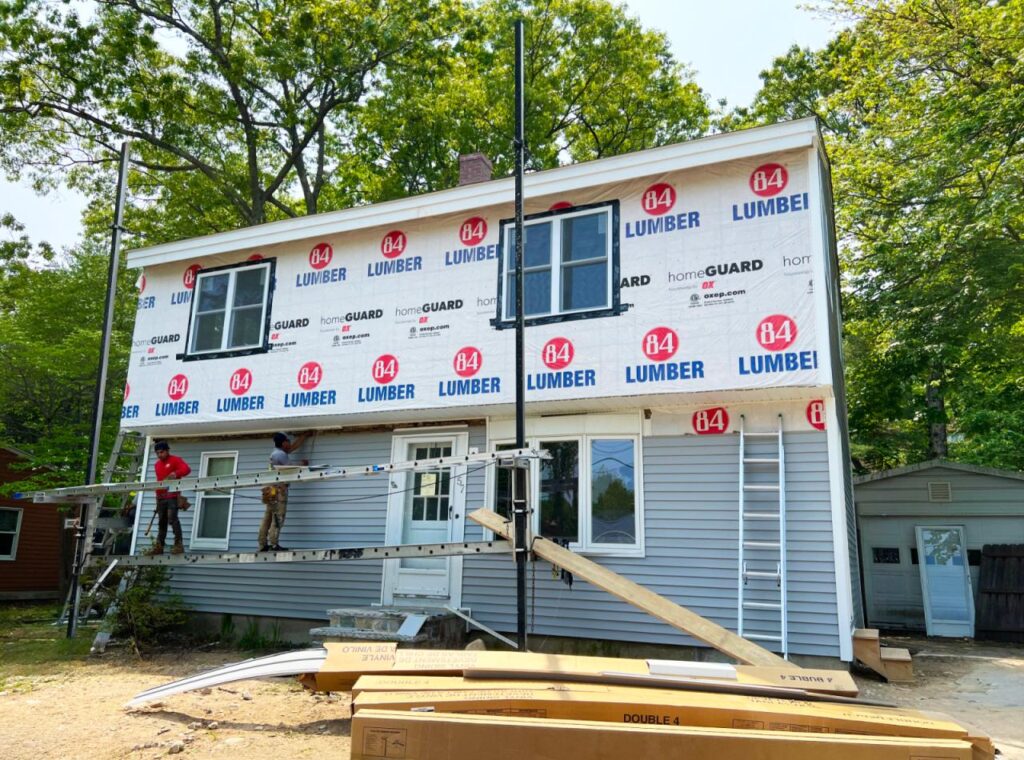
Beantown Builders’ second-level ADU addition in Abington is one example. By building above the existing structure, the project expanded the home’s living space without sacrificing outdoor space. It illustrates how the right approach can make better use of an existing property.
The value is not simply adding another dwelling. It’s identifying whether part of your existing property can serve a meaningful purpose that its current layout does not support.
Before moving forward, consider which areas could accommodate an independent dwelling and whether the available space, utilities, access, and construction requirements make that option practical. Your project team can help assess those possibilities before you commit to a design.
Boston ADU Rules Come Before Design
Boston’s ADU rules are not the same as the statewide Massachusetts ADU rules.
Massachusetts’ statewide ADU law under Chapter 40A applies to 350 municipalities but not Boston, because Boston is not governed by that zoning law. The state’s ADU guidance specifically identifies Boston as the exception, so Boston homeowners need to follow the City’s separate eligibility and zoning requirements.
Under current City of Boston ADU guidance, you must be an owner-occupant of a one-, two-, or three-family home to be eligible to build an ADU. Condominiums and properties owned by LLCs are not eligible under the City’s current program. The type of ADU also matters:
- Internal ADUs: Qualifying owner-occupants throughout Boston may add one internal ADU within the existing building footprint. The internal ADU cannot add new square footage outside that footprint.
- Attached and detached ADUs: Boston’s zoning code does not generally allow these by right citywide. Outside the applicable Mattapan zoning area, a project may need zoning relief from the Zoning Board of Appeal.
- Mattapan: Certain qualifying parcels within the updated Greater Mattapan zoning can allow attached and detached ADUs without special zoning approval when the project meets the applicable zoning requirements.
Boston requires a long-form building permit for every ADU. Depending on the scope, other permits or approvals may also be required.
Start by checking your property’s zoning district and applicable restrictions using Boston’s Zoning Viewer. This is a starting point, not confirmation that an ADU is permitted. Your design and construction team can then evaluate the property’s eligibility, the type of ADU you’re considering, existing conditions, utilities, budget, and required approvals before developing the design.
When an ADU May Not Be the Right Solution
An ADU is one possible way to create family flexibility, rental potential, or more use from an existing property. It is not automatically the right solution for every Boston property.
An ADU may deserve more scrutiny when:
- The property cannot support the desired type of unit without significant zoning relief or site work.
- The available space produces a layout that does not meet the intended household need.
- Existing structural, utility, drainage, or access conditions make the project disproportionately complex.
- The construction budget is difficult to justify for the benefit you are trying to create.
- A home addition, renovation, or different property strategy would address the underlying need more directly.
This is where feasibility matters. The question is not simply whether an ADU is technically possible, but whether it is the right plan for this property, this budget, and the outcome you want.
Decide What the ADU Needs to Accomplish Before You Design It
The strongest reason to pursue an ADU is not that ADUs are popular. It is that a particular unit can solve a meaningful property or household need in a way that is feasible and worth the investment.
That reflects Beantown Builders’ planning-first approach: Exceptional projects begin long before construction starts. Through our Right Plan Framework™, we help you clarify what you want your property to accomplish, evaluate its feasibility and constraints, and develop a realistic scope and plan—so you can make informed decisions and move toward construction with greater clarity and confidence.
If you are considering an ADU in Boston or Greater Boston and are working through what you want the unit to accomplish, a free discovery call is a good first step to discuss your goals with our team. Book a Free Discovery Call
Frequently Asked Questions
What are the main benefits of adding an ADU to a Boston property?
Potential benefits include rental income, a separate dwelling for family members, aging-in-place or caregiver options, greater flexibility as household needs change, possible resale appeal, and an additional housing unit on an existing property. The actual value of those benefits depends on the property’s feasibility, project cost, design, and intended use.
Does Massachusetts’ statewide ADU law apply in Boston?
No. Massachusetts’ Chapter 40A ADU law does not apply to Boston because Boston is not subject to that zoning law. Boston has its own ADU eligibility and zoning requirements, so use current City guidance when evaluating a Boston property.
Can I build a detached ADU anywhere in Boston?
Not automatically. Boston allows internal ADUs for qualifying owner-occupants citywide within the existing building footprint. Attached and detached ADUs outside the qualifying Mattapan zoning area may require zoning relief. Confirm the zoning for your parcel and the type of ADU you want before developing the design.
Will an ADU increase my property value?
It may, but there is no universal percentage or guaranteed increase. Appraisers evaluate the market reaction to an ADU using relevant property and comparable-market data. The unit’s legal status, condition, layout, and local market can affect how it is viewed.
Can I rent an ADU in Boston?
Yes, when the applicable requirements are met. Boston requires annual ADU registration even if no rent is collected, including occupancy by adult relatives not on the deed. Vacant units must also be registered. If you rent the unit, applicable landlord and housing requirements also apply.