
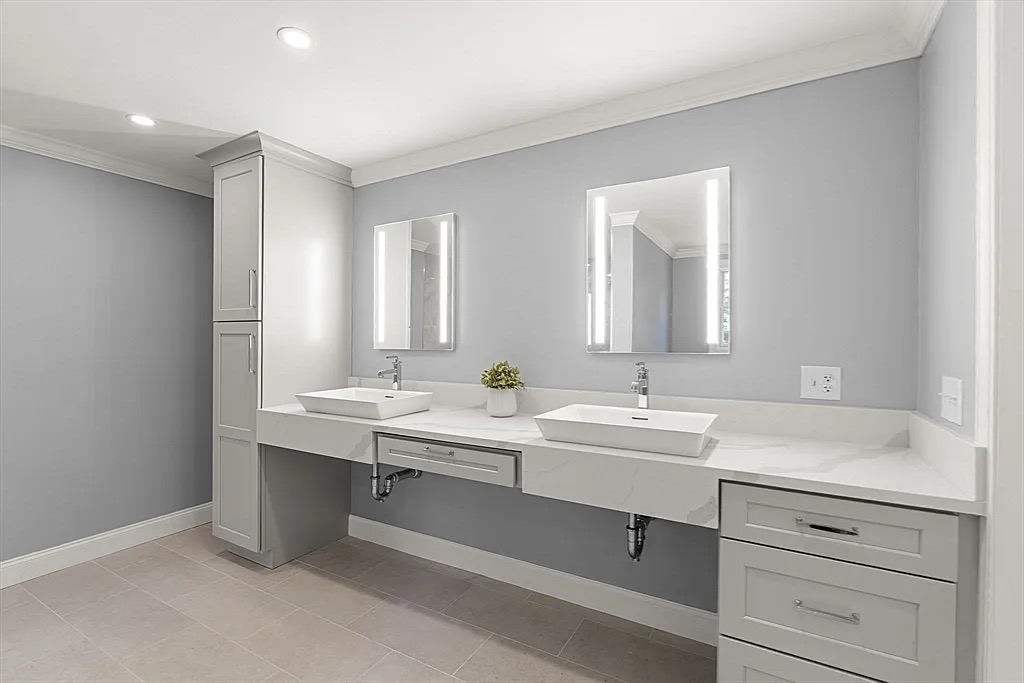
If you’re considering a bathroom renovation in Boston or the wider area of Massachusetts, one of your first questions is probably pretty simple: How much is this going to cost?
The answer isn’t straightforward.
While you’ve probably already seen guesses by Angi’s List, it’s important to remember that bathroom renovation costs vary a lot from one property to another. A quick remodel that keeps the existing layout will have a much lower price tag than a complete remodel that relocates plumbing, modifies walls, and introduces custom designs.
That’s why determining a realistic bathroom remodeling budget isn’t simply a matter of multiplying the room’s square footage by an average cost.
The better question is: What goals does this particular bathroom need to accomplish, and what do I need to change for it to accomplish them?
Thoughtful planning before construction can help property owners answer that question and establish realistic expectations before making significant commitments. Let’s dive into the average costs, and what can change them.
Average Cost Ranges Of Bathroom Renovations
Bathroom remodeling costs in Massachusetts span a wide range because the term “bathroom renovation” can describe very different projects.
At one end is a relatively limited renovation. In this scenario, your existing bathroom configuration remains intact: just finishes and fixtures get replaced. Your vanity, toilet, flooring, lighting, tile, and shower finishes might change, but the basic footprint doesn’t.
A more substantial renovation may involve opening walls, replacing aging plumbing, upgrading electrical work, installing extensive tile, improving ventilation, changing the bathtub or shower configuration, and addressing conditions uncovered during demolition.
At the other end are comprehensive bathroom remodels – major renovations that substantially alter the room. These gut renovation projects usually involve a new layout, custom cabinetry, premium tile installations, relocated plumbing, and even structural modifications.
The distinction matters, because a major renovation will put you squarely on the high end of the budget ranges.
Competitor cost data provided for this article illustrates just how wide the Massachusetts market can be, with bathroom type, size, material choices, labor, and utility relocation repeatedly appearing as major variables.
This explanation may seem vague. So if you’re looking for explicit numbers? Well….
- As a national average, NerdWallet says bath renovations range from $6,600 – $85,000.
- Angi’s List guesses that the average Boston bath renovation comes out to $12,625.
- Modernize thinks the average Boston bath reno is between $10,000 and $28,000.
- Local firms like Colony Home Improvement estimate that Massachusetts prices range from $8,000 to $75,000+ and up.
Those are pretty wide ranges, so we recommend not treating any online “average bathroom remodeling cost” as a quote. Just keep this in mind as an initial reference point. A more reliable project budget will shape up later, after your property’s existing conditions and the intended scope have been evaluated.
How Much Is A Bath Remodel In Boston?
RemodIQ estimates that renovations in Boston cost +40% more than the US national average, with labor driving most of the difference. While the numbers aren’t exact, Boston definitely presents some conditions that aren’t necessarily captured by statewide averages.
Properties may be older, access can be more difficult, staging and material deliveries can require additional coordination, and existing building systems often create complications once construction begins. Bathrooms in Boston’s triple-deckers and other multifamily properties can also involve considerations that extend beyond the room itself.
If you’re based in Boston, be ready for extenuating factors and circumstances to crop up in your bath renovation estimations.
Factors Determining Bathroom Remodeling Costs
Like we said earlier: there’s no single variable that determines bathroom renovation costs. Several decisions and existing conditions interact to establish the final scope.
Understanding them before construction begins gives property owners like you a clearer picture of where the project is straightforward and where additional investigation is needed.
Bathroom Dimensions
Bathroom size definitely matters, but square footage alone doesn’t tell the whole story.
A larger bathroom generally requires more flooring, wall material, paint, waterproofing, and labor. However, bathrooms contain a relatively high concentration of fixtures and skilled trade work within a small footprint.
That means a compact bathroom with a toilet, vanity, tiled shower, plumbing, electrical work, ventilation, and custom finishes can still represent a substantial project.
Fixture count can sometimes be more informative than square footage:
- A powder room may contain only a toilet and sink.
- A typical full bathroom adds a bathtub or shower.
- A larger primary bathroom could contain two sinks, a separate shower and tub, additional cabinetry, more lighting, and considerably more tile.
For multifamily owners renovating several similar bathrooms, another factor becomes important: repetition. Establishing consistent layouts, fixtures, finishes, and specifications across your property’s bathrooms can simplify future maintenance and replacement decisions.
Renovation Complexity
This one’s pretty obvious: an easy renovation will have an easier price tag. If the existing layout works well, keeping major fixtures in their current locations can reduce the amount of plumbing, electrical, framing, and finish work required.
Once the floor plan changes, additional trades might have to join your team. You might need to get an architect involved, or MEP services might need to be consulted and added.
Moving a shower could require new supply and drainage lines. Relocating a toilet can mean modifying the waste system. Expanding the bathroom might require wall changes. New lighting, receptacles, heated flooring, or ventilation can introduce electrical and mechanical work.
Older properties add another layer of uncertainty. While the historical charm can’t be denied, older homes often have had multiple rounds of renovations: meaning you might find a few surprises. Previous modifications that weren’t constructed to current standards, deteriorated materials, moisture damage, aging pipes, and other issues can be hiding in historical properties.
That’s why our team at Beantown Builders emphasizes understanding our projects before construction. Our objective isn’t just to get right to knocking walls down and rush your demolition without thinking. It’s to develop the right plan for your property before any major commitments are made.
Utility Changes
Plumbing and electrical changes are some of the most expensive decisions in a bathroom remodel.
Keeping a toilet, shower, tub, and vanity near their existing utility connections is less complicated than relocating them. Moving those fixtures might require opening additional walls or floors and modifying drain, ventilation, and electrical systems.
This becomes particularly important in triple-deckers and other multifamily properties.
A plumbing stack may serve bathrooms on several floors. A proposed change inside one unit therefore needs to be evaluated in relation to the larger building system rather than treated as an isolated fixture replacement.
Massachusetts’ Uniform State Plumbing Code governs the installation, alteration, replacement, repair, and construction of plumbing systems.
In Boston, plumbing permits cover work involving water lines, bathroom fixtures, and non-structural piping, and those permits are available to licensed contractors rather than homeowners.
Material Finish Quality
Material selections are another choice that can make big changes to your final price tag.
Tile provides a good example. Tile dimensions, patterns, layouts, transitions, edge details, and installation complexity can all affect the amount of labor involved.
The same principle applies to vanities, countertops, plumbing fixtures, shower glass, lighting, hardware, and cabinetry.
Custom products can also introduce longer lead times and additional coordination.
Higher-priced doesn’t automatically mean better for every project. The right material is the one that supports the property’s intended use, aesthetic goals, maintenance requirements, and long-term plan.
For multifamily properties in particular, durability and maintainability can be as important as appearance. Materials should be considered not only for how they look when construction ends, but for how they’ll perform through years of regular use.
Property Location
Where your property is located also matters for your wallet. Boston and surrounding Greater Boston communities have different permitting departments, administrative procedures, inspection requirements, and local conditions.
The age and type of property matter just as much as the municipality.
Renovating a bathroom in a newer suburban property isn’t necessarily equivalent to renovating one on the upper floor of an older Boston triple-decker.
Building access, existing systems, occupied units, shared utilities, historic conditions, and previous renovations can all influence how the work needs to proceed.
That’s another reason broad statewide bathroom cost averages have limitations. Two bathrooms of nearly identical dimensions can require very different plans.
Labor & Admin Costs
A professionally managed bathroom renovation brings together more than what you’ll see in the before/after photos.
Depending on the scope, a bathroom renovation could require carpentry, plumbing, electrical work, tile installation, waterproofing, painting, ventilation work, inspections, project supervision, material coordination, and quality control.
It might seem excessive, but don’t forget: your building team determines the quality of your finished bathroom design. Plus, project coordination also matters. Scheduling trade partners in the correct sequence, ordering materials before they’re needed, preparing for inspections, communicating around occupied units, and resolving existing conditions can influence both your experience and your final outcome.
The goal of professional project management is greater predictability: fewer assumptions, clearer decisions, and better alignment between the plan and what ultimately gets built.
When Do You Need A Permit To Remodel Your Massachusetts Bathroom?
Whether a bathroom renovation requires permits depends on what you’re changing and where the property is located. Cosmetic work isn’t the same as altering plumbing, electrical systems, walls, or other regulated building components. A renovation involving multiple trades may require multiple permits.
Massachusetts currently operates under the 10th Edition of the State Building Code, although the specific requirements affecting a project depend on the property and proposed work. Property owners should also confirm requirements with their local building department, since permit administration occurs at the municipal level. If you’re working with a general contractor or a design-build company, some can handle this for you.
Boston provides especially useful guidance for local property owners.
The City identifies short-form permits for certain minor changes, repairs, or replacements and long-form permits for major alterations that change a building’s structure or use. Electrical installations, alterations, and repairs have their own permitting requirements, as does plumbing work involving water lines and bathroom fixtures.
Boston’s Inspectional Services Department also states that a bathroom or kitchen renovation can require several permits.
For electrical work, the City requires a licensed contractor to apply for the electrical permit. Homeowners can’t apply for that permit themselves.
The same general rule applies to Boston plumbing permits, which must be obtained by the licensed contractor performing the work. The City also instructs applicants not to begin work until the permit has been issued.
What Are The Most Costly Bathroom Renovation Projects?
The most expensive bathroom projects tend to combine several forms of complexity rather than one costly product.
Major layout changes can increase the scope because plumbing, electrical systems, walls, flooring, and finishes may all be affected.
Custom showers and extensive tile installations can involve substantial preparation, waterproofing, skilled installation, custom glass, niches, benches, multiple tile formats, and detailed transitions.
Plumbing relocation can become especially involved when drain and vent systems need to be modified or when the work interacts with other portions of the building.
Structural changes can introduce additional design, engineering, framing, permitting, and inspection requirements.
Custom cabinetry and specialized finishes may require more fabrication, coordination, and installation than standard products.
Repairs to concealed conditions can also affect the scope. Bathrooms are moisture-intensive spaces, so demolition can sometimes expose deteriorated framing, damaged subfloors, plumbing problems, or other conditions that need to be corrected before the new bathroom is assembled.
How Much Does A Bath Renovation Improve Home Value?
Bathroom remodeling improves a property’s appeal and resale value, but it shouldn’t be assumed that every renovation produces the same financial return.
The 2025 Cost vs. Value Report for the Boston market estimated that a midrange bathroom remodel recouped approximately 65.3% of its cost at resale. The same report estimated a substantially lower percentage for an upscale bathroom remodel, illustrating an important point: spending more doesn’t automatically produce an equivalent increase in resale value.
Those figures are market-level estimates, not guarantees for an individual property.
The actual impact depends on the property’s condition, neighborhood, existing bathroom quality, overall building condition, buyer expectations, and the decisions made during the renovation.
Value can also mean more than resale.
If you’re renovating your own bathroom, it might absolutely be worth a hefty price tag for a better everyday experience.
If you’re renovating a small multifamily or commercial property, the objectives can be different. A bathroom renovation may help modernize an outdated unit, improve durability, reduce recurring maintenance issues, or make the property better suited to its intended market.
Begin Renovating Your Boston Bath With Beantown Builders
An exceptional bathroom renovation begins before the first fixture is removed.
It begins by understanding why you’re renovating, what the bathroom needs to accomplish, what conditions already exist, and which decisions will create the most meaningful improvement for the property.
At Beantown Builders, we help owners of existing homes and small to medium-sized income-producing properties develop and execute the right plan for their property through planning, design, and construction.
When you work with us, our Right Plan Framework™ aims to progressively evaluate decisions, validate assumptions, reduce uncertainty, and establish greater clarity before construction begins. The plan considers the outcome you’re trying to achieve alongside feasibility, design, scope, budget, and execution.
Ready to understand what’s possible for your bathroom and your property? Contact us today to begin your consultation with Beantown Builders.
Frequently Asked Questions About Bathroom Renovations in Massachusetts
How long does a bathroom renovation take?
Much like cost, a bathroom remodel’s timeline depends on design, permitting, existing conditions, and construction complexity. A bathroom that retains its existing configuration and uses readily available materials generally involves fewer variables than a complete redesign with relocated utilities and custom products.
Preconstruction planning can also influence the construction experience. Making important design, material, and scope decisions before demolition reduces the number of unresolved questions that have to be answered while work is underway.
Are bathroom renovations different in Boston’s triple-deckers?
Often, yes. Triple-deckers and other small multifamily properties may have shared or vertically connected building systems, occupied units, limited access, older construction, and previous renovations that influence the project.
It’s particularly important to understand how the bathroom relates to the building’s plumbing, electrical, ventilation, and structural systems before changing the layout. A plan that works inside one room still needs to make sense for the property as a whole.
Should I renovate multiple bathrooms in a multifamily property at the same time?
That depends on the property’s condition, occupancy, goals, and the work required. Coordinating multiple bathrooms may create opportunities to standardize materials, fixtures, layouts, and maintenance requirements, but simultaneous construction can also create greater disruption for occupied properties.
A phased approach may make more sense in some buildings. Evaluating the complete property first allows the owner to establish priorities and develop a renovation sequence rather than making each bathroom an isolated decision.