
Last Updated: October 19, 2026
Hiring a contractor after a fire is different from hiring for a planned remodel. The property may have structural damage, water from fire suppression, smoke contamination, damaged building systems, and conditions that cannot be fully understood until damaged materials are removed.
If you are preparing to rebuild, your goal is not simply to find someone who can perform repairs. You need a contractor and project team that can help turn the known damage, remaining unknowns, regulatory requirements, design decisions, and reconstruction work into a clear plan.
This guide explains how to evaluate that team, what Massachusetts homeowners should verify, what a reconstruction contract should contain, and how to compare contractors without relying on price alone.
Start With Safe Access and a Defined Reconstruction Scope
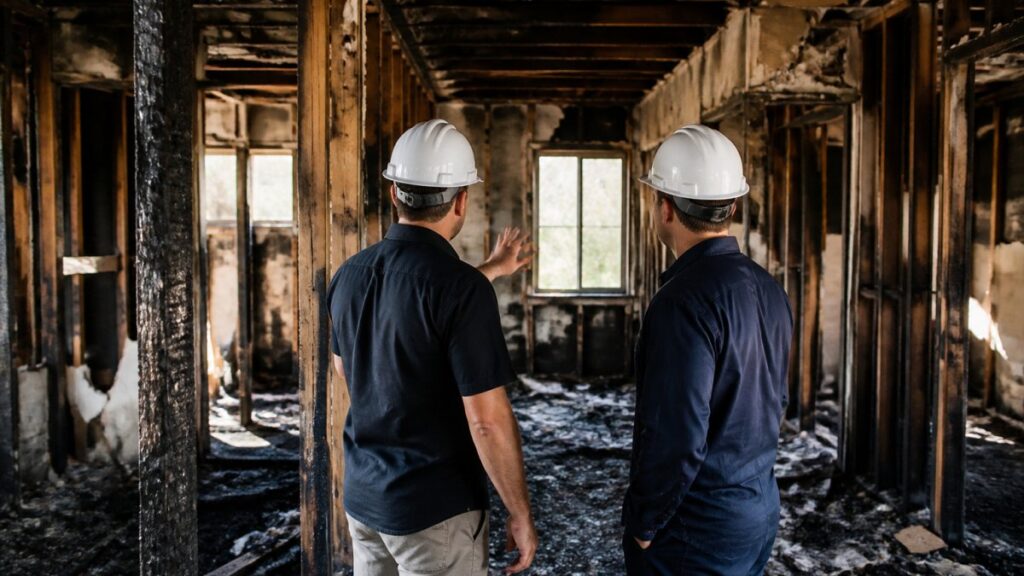
Before you or a contractor walks the property, make sure it has been cleared for entry. The U.S. Fire Administration advises owners not to enter a fire-damaged home unless the fire department says it is safe. If the building has been restricted by a fire official or building inspector, follow those instructions before scheduling contractor walkthroughs.
Once access is safe, the reconstruction scope should develop from the actual condition of the building. You do not need a finished construction scope before speaking with a qualified builder. In a significant reconstruction, assessment, design, engineering, permitting, and selective demolition may all reveal information that changes the work.
What you do need is a clear process for turning those findings into a written scope. Ask how the contractor will document:
- Areas and building systems that require repair or replacement
- Work that remains outside the reconstruction scope
- Code or safety upgrades triggered by the work
- Allowances or selections that are not yet final
- Conditions that cannot be confirmed until further investigation
- Changes to cost or schedule when new conditions are discovered
A reconstruction scope should become more specific as uncertainty is reduced. In Beantown Builders’ fire-recovery process, qualified projects move from the initial conversation into a paid on-site feasibility review that documents existing conditions, identifies key risks and cost drivers, and tests whether the initial scope and expectations are realistic. That gives you a stronger basis for deciding what should move into design and construction than a broad promise to “restore” the property.
Understand the Difference Between Mitigation and Reconstruction
After a fire, emergency mitigation and reconstruction may involve different specialists, and the phases can overlap.
Emergency or restoration work can include securing the property, water extraction and drying, smoke and soot cleaning, debris removal, salvage, and specialized remediation. Reconstruction involves rebuilding and restoring the affected areas of the property, including structural repairs, mechanical and electrical work, insulation, walls and ceilings, finishes, and other construction needed to return the property to a usable condition.
Some companies perform both types of work; others specialize in one. The label matters less than the documented scope and the qualifications of the people responsible for each part of the project.
For a reconstruction involving structural damage or substantial changes to an older property, ask who owns each handoff between mitigation, design, permitting, specialty remediation, licensed trades, and rebuilding. The risk is not only whether each company is qualified; it is whether a gap between scopes leaves work unassigned or assumptions unresolved. You should be able to identify who is responsible for each part before signing a construction agreement.
Questions to Ask a Fire Damage Reconstruction Contractor
Ask each contractor the same core questions so you can compare the answers directly.
Start with scope and existing conditions:
- How will you document the damage and existing conditions?
- Which parts of the scope can be confirmed now, and which require further investigation?
- Who determines whether structural engineering or other professional design is required?
- How will concealed conditions be documented and presented to me?
Then ask about project management:
- Who is responsible for the construction schedule?
- Who will be my primary point of contact?
- How are owner decisions and approvals documented?
- How are proposed changes to scope, cost, or schedule communicated before work proceeds?
- How do you coordinate licensed trades and specialty contractors?
Finally, ask for the credentials and insurance that apply to your project. Massachusetts requirements vary by property type and scope, so a qualified contractor should be able to explain which registrations, licenses, permits, and specialty credentials apply rather than simply presenting a list of certificates.
After the property has been cleared for entry, a site review can also tell you a great deal about how a contractor approaches the work. Ask what they can confirm, what remains uncertain, and what additional investigation is needed before a reliable scope and budget can be developed.
Verify the Massachusetts Requirements That Apply to Your Project
For work on an existing, owner-occupied residential property with one to four units, Massachusetts generally requires the contractor who solicits, bids on, or performs covered home-improvement work to hold an active Home Improvement Contractor registration. The Commonwealth’s HIC homeowner guidance also recommends checking registration status and disciplinary history and requesting proof of liability insurance and workers’ compensation insurance when applicable.
A Home Improvement Contractor registration is not the same as a Construction Supervisor License. Depending on the building and work, Massachusetts may require construction to be overseen by a licensed construction supervisor or registered design professional. The state’s Construction Supervisor License guidance explains the general requirements, but project-specific questions should also be confirmed with the local building official.
Older properties can introduce additional requirements:
- Lead-safe renovation: Paid renovation work in qualifying pre-1978 housing that disturbs painted surfaces above the applicable thresholds must be performed under Massachusetts lead-safe renovation requirements. Review the state’s lead-safe renovation guidance for homeowners.
- Asbestos: When demolition or renovation will affect areas containing suspect asbestos-containing material, Massachusetts generally requires a pre-work asbestos survey by a licensed asbestos inspector. The exception is narrow: it applies to an owner of an owner-occupied single-family residence performing the work personally and involving only non-friable asbestos-containing material. MassDEP’s asbestos survey guidance explains the survey requirements.
These requirements are not reasons to assume an older property will need every possible upgrade or remediation measure. They are reasons to establish which rules apply before demolition and reconstruction move forward.
Review the Fire Damage Reconstruction Contract Carefully
For home-improvement work covered by the Massachusetts HIC law, contracts over $1,000 must be in writing and contain specific information. The Commonwealth’s home improvement contract requirements include, among other required terms, a detailed description of the work and materials, total price, payment schedule, start and completion dates, contractor registration information, required permit language, and signatures. Modifications to the original contract must also be in writing and agreed to by both parties.
Those legal requirements are the baseline. For a complex reconstruction, the contract and scope should also make the project understandable in practical terms. Review whether it clearly addresses:
- What is included and excluded
- Allowances and selections that remain open
- Permit responsibilities
- How concealed conditions will be handled
- How changes to scope, cost, and schedule will be proposed and approved
- Warranty terms that actually apply
- Project communication and decision responsibilities
- Closeout requirements and final documentation
Do not assume that a particular payment structure, lien-waiver provision, project-management format, or insurance endorsement is required for every project. Those provisions can depend on the contract, lender, insurer, and project circumstances. If a legal or insurance provision is important to your situation, have the appropriate attorney or insurance professional review it.
Compare Proposals by Scope, Assumptions, and Uncertainty
A lower proposal is not automatically a better proposal, and a higher proposal is not automatically more complete.
Compare what each contractor has actually included. Look at the same categories across proposals:
- Demolition and debris handling
- Structural repairs
- Electrical, plumbing, heating, cooling, and ventilation
- Insulation and building-envelope work
- Walls, ceilings, flooring, trim, cabinets, and other finishes
- Design, engineering, and permit-related services
- Specialty remediation or testing
- Allowances and owner selections
- Exclusions and unresolved conditions
If one proposal appears significantly lower, first isolate the difference: is it a true scope difference, an allowance, an exclusion, or an unresolved condition? Those are not equivalent. A lower total caused by omitted or undefined work does not represent the same project at a lower price. The useful comparison is what each proposal commits to deliver, what remains uncertain, and how those uncertainties will be converted into approved scope and cost.
The same principle applies to schedule. Fire reconstruction does not have one reliable universal duration. Timing can depend on structural damage, investigation, design and engineering, lead or asbestos requirements, permit review, material availability, trade coordination, and conditions discovered during demolition.
Ask each contractor for a written schedule or milestone plan that identifies the major dependencies. A useful schedule should show the sequence from assessment and planning through permits, reconstruction, inspections, and closeout, while clearly identifying what could change that sequence.
A Practical Contractor-Vetting Sequence
You can use this sequence to narrow the field without trying to make every decision at once:
- Confirm the property is safe to enter. Follow fire-department and building-official restrictions before any walkthrough.
- Identify the current phase of recovery. Understand what emergency mitigation or remediation has already been completed and what remains.
- Interview contractors with relevant reconstruction experience. Ask how they handle structural work, older buildings, design coordination, and concealed conditions.
- Verify applicable credentials and insurance. Check HIC registration, CSL or design-professional oversight where required, specialty credentials, and insurance relevant to the project.
- Review the property together after it is safe. Compare what each contractor can confirm, what they flag for investigation, and how they propose to reduce uncertainty.
- Compare written scopes rather than headline totals. Align inclusions, exclusions, allowances, and assumptions before comparing price.
- Review the contract and change process. Make sure the written agreement satisfies applicable Massachusetts requirements and explains how project changes will be handled.
- Confirm communication and decision responsibility. Know who will coordinate the work, who communicates with you, and how decisions will be documented.
The goal is not to find a contractor who claims to know everything at the first meeting. It is to find a team with a solid process for identifying what is known, investigating what is not, and turning those findings into a coordinated reconstruction plan.
Build the Reconstruction Plan Before You Build Back
Fire damage can create pressure to move quickly, but major reconstruction still benefits from disciplined planning before construction decisions become difficult to reverse. Beantown Builders’ Dorchester Fire Rehabilitation Project is one example of our team executing the rehabilitation of a home after a fire ravaged the interior.
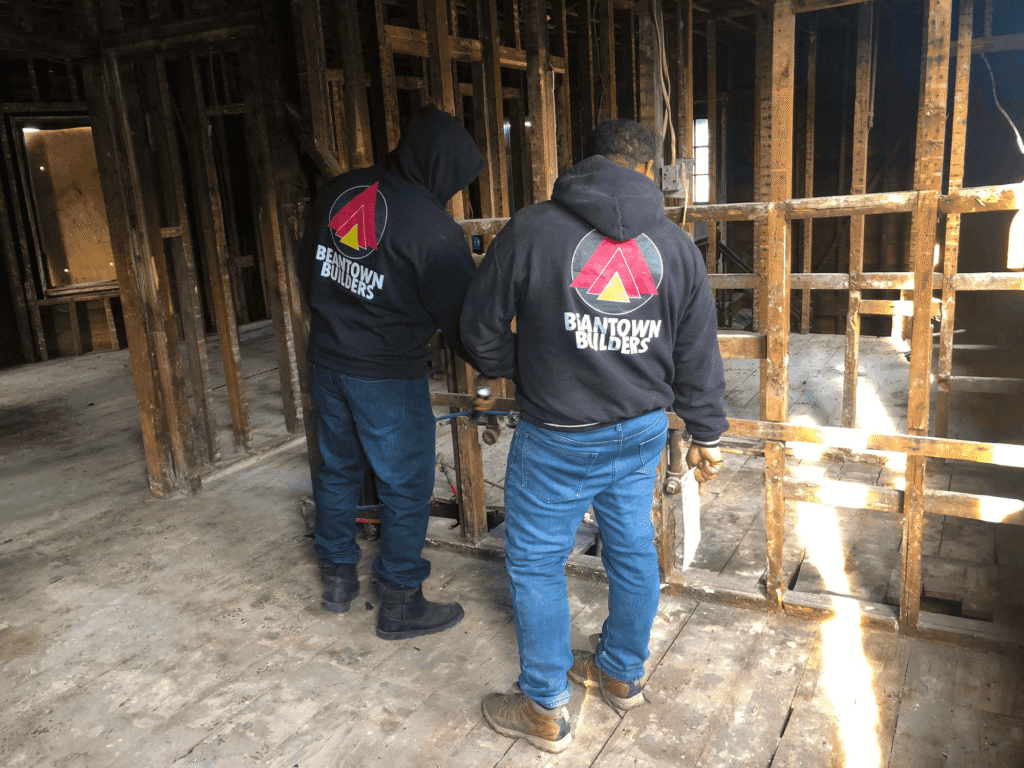
Every fire loss presents different conditions, which is why the reconstruction plan has to follow the actual property rather than a standard template.
At Beantown Builders, we treat fire reconstruction as a sequence of decisions rather than a race to a construction start. Through our Right Plan Framework™, feasibility helps establish what is actually possible, while structured preconstruction aligns design, scope, budget, and expectations before the rebuild advances. For you, the practical value is greater clarity about what has been confirmed, what still requires a decision, and what assumptions should be resolved before construction begins.
For projects that involve significant rebuilding, structural work, or design coordination, you can learn more about our fire and flood restoration services.
If you are evaluating a fire-damage reconstruction project in Greater Boston, a free initial conversation can help you discuss your goals, high-level scope, and explore whether our approach aligns with your project. Book a Free Discovery Call.
Frequently Asked Questions
How do I choose a contractor for fire damage reconstruction?
Choose based on the contractor’s ability to define and manage the reconstruction scope, not simply on restoration experience or the lowest proposal. Verify the registrations, licenses, insurance, and specialty credentials that apply to your property; compare written scopes and assumptions; and ask how the team documents conditions, manages changes, coordinates design and trades, and communicates decisions.
Should I hire a restoration company or a general contractor after a fire?
It depends on what work remains. Emergency mitigation may require specialists in drying, smoke and soot cleaning, debris removal, salvage, or hazardous-material remediation. Reconstruction requires the team responsible for structural repairs, building systems, finishes, permits, and other construction work. Some companies provide both; others coordinate specialty firms. Focus on who is contractually responsible for each part and whether they are qualified for that scope.
How long does fire damage reconstruction take?
There is no reliable universal duration. The schedule depends on the extent of damage, required investigation and design, permitting, lead or asbestos requirements, material availability, trade coordination, inspections, and conditions found during demolition. Ask for a written milestone schedule and an explanation of the dependencies that could change it.
What qualifications should a fire damage reconstruction contractor have in Massachusetts?
The answer depends on the property and scope. For covered work on an existing owner-occupied one- to four-unit residence, verify the contractor’s HIC registration. Reconstruction may also require oversight by a Construction Supervisor License holder or registered design professional. Pre-1978 painted-surface work and asbestos-affected renovation or demolition can trigger additional licensed-specialty requirements. Ask the contractor to identify which requirements apply and verify them through the relevant Massachusetts agencies before work begins.